

 10 items
 Deutsch
 Français
 Nederlands
- Memorial for George-James Duke of Hamilton, Marquis of Douglas, Earl of Angus, &C. Lord Douglas Hamilton, and Their Tutors, and Sir Hew Dalrymple of Northberwick, Baronet, Pursuers, Against the Person Pretending to Be Archibald Stewart, Alias Douglas, Only Son Now on Life of the Marriage between Colonel John Stewart, Afterwards Sir John Stewart of Grandtully, and Lady Jane Douglas, Sister-German of Archibald Duke of Douglas, Defender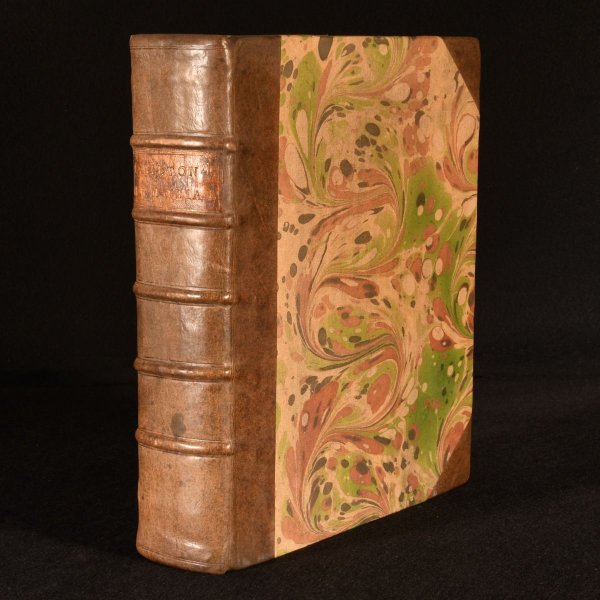 Not Stated, Not Stated, 1767. First edition. Leather. The first edition of this scarce account of the cause celebre of the 1760s Douglas case. The first edition of this scarce work.A detailed account of the Douglas Cause. The 1760s Douglas Cause was a large cause celebre which garnered a lot of attention; the case was a legal struggle between Archibald Douglas, and James Douglas-Hamilton, over the inheritance of Archibald Douglas, the 3rd Marquess and 1st Duke of Douglas. The 3rd Marquess was a recluse, never marrying or having issue. His sister, Lady Jane Douglas, was likewise childless, thus the Marquess' fortune was to pass through his kinsmen, the Dukes of Hamilton, to be settled on the 7th Duke of Hamilton. However, at the age of 50, Lady Jane admitted to having been secretly married, and subsequently had twin boys whom she has birthed in Paris. Upon the Marquess' death, his titles landed on James Douglas-Hamilton, whereas his lands went to Archibald Douglas. The Hamiltons then contested the settlement, sending a man to Paris to investigate the birth of the mysterious twins. The investigator came back with information that both of the boys had been kidnapped as infants from French couples to be passed off as Lady Jane's own children. This led to the court case which is faithfully recounted in this volume. Twenty-four lawyers read speeches to the fifteen judges, with hearings lasting twenty-one days, making it the longest ever pleading before the Court of Session. The court gave its opinion, being split down the middle in opinion, however the Lord President Robert Dundas gave his decisive opinion on the side of Hamilton. Two years later, in 1769 and thus not detailed in this volume, the case was appealed to the House of Lords, and having reevaluated the case, the verdict was unanimously in favour of Archibald Douglas. There was immense public interest in the trial, with David Hume and Samuel Johnson supported Hamilton, whereas James Boswell supported Douglas, and became a propagandist for him.Collated, bound without the final four leaves of the index. In a half calf binding with marbled paper to the boards. Externally, smart. Spine label is a little discoloured. A few light marks to the boards and spine. Light edge wear to the endpapers. Prior owner's ink inscription to the recto of the front free endpaper. Internally, firmly bound. Pages are lightly age-toned and generally clean, with a few scattered spots. Near Fine . Ill.: None. Near Fine . GBP 490.00 [Appr.: EURO 558.5 US$ 644.26 | JP¥ 99349] Book number 970P20is offered by:
|
Order this book Ask for information Back to your search results |
